
Which Research Peptides for Weight Loss Actually Work in 2026?
A practical guide to the most effective research peptides for weight loss — Semaglutide, Tirzepatide, and Retatrutide. What the clinical data shows, what real users report, how these compounds are actually made, and why vendor integrity matters more than the molecule itself.
 Harrison Peralta · Updated Jul 2026 · 11 min read
- People searching for effective fat loss often ask which research peptides for weight loss deliver real results. Based on clinical data and widespread user feedback, Semaglutide, Tirzepatide, and Retatrutide currently stand out as the most discussed and effective options.
- These compounds are specific amino acid chains that sophisticated labs can synthesize accurately. While big-pharma narratives often create fear around research versions, any well-equipped laboratory can produce them reliably — the real difference lies in vendor quality, recent third-party COAs, and proper batch tracing.
What are research peptides for weight loss?
Research peptides for weight loss are synthetic versions of gut hormones that regulate appetite, digestion, and metabolism. The most popular ones primarily activate the GLP-1 receptor, while newer versions also target GIP and glucagon receptors.
These molecules are well-defined chains of amino acids. Unlike large, complex biologics that require living cells to produce, these peptides can be chemically synthesized by modern laboratories with striking accuracy when the right equipment, expertise, and quality systems are in place.
Any sophisticated lab can reproduce these peptides reliably. The fear and doubt often pushed in mainstream discussions frequently serves more as a power move to protect approved medications than a reflection of genuine technical limitations in making the molecules themselves. The real variable is vendor quality and transparency.
The main research peptides for weight loss
Here’s a detailed look at the three most commonly discussed options.
Semaglutide
Semaglutide is a GLP-1 receptor agonist. It was first approved for type 2 diabetes and later for weight management.
- How it works — it mimics the GLP-1 hormone, which reduces appetite and slows how quickly food leaves the stomach.
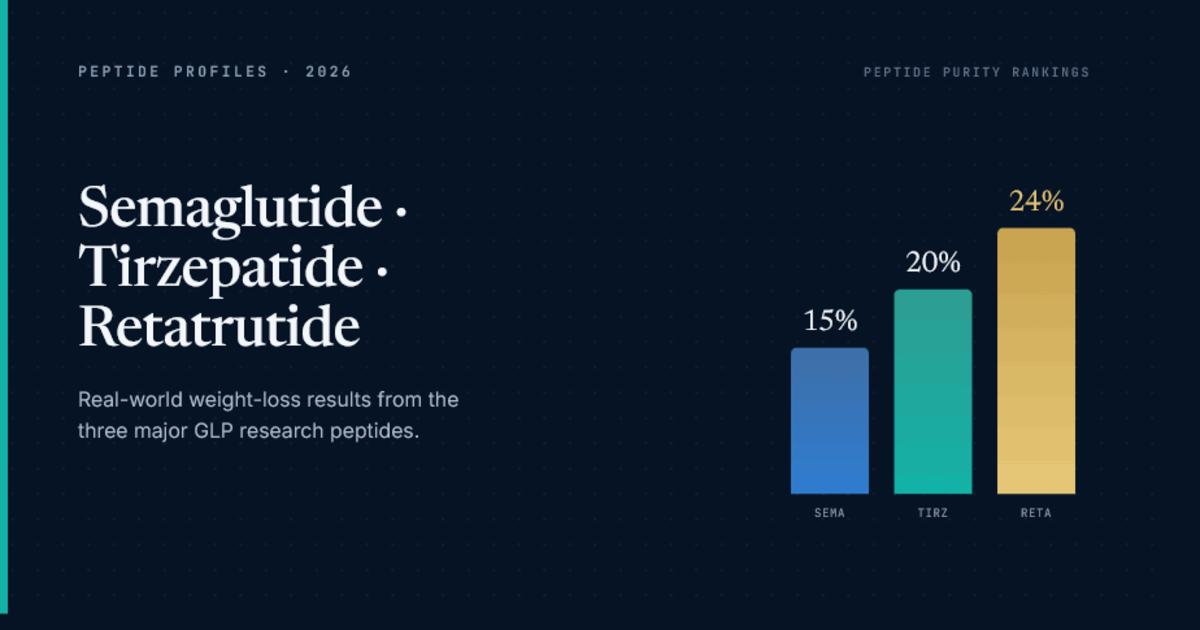
- Clinical research — large trials published in the New England Journal of Medicine showed average weight loss of 10–15% of body weight over 68 weeks when combined with lifestyle changes. View study →
- Real user experiences — many people using research versions report strong appetite suppression and steady fat loss, especially in the 0.5–2.4 mg weekly range. Common feedback includes reduced “food noise” and better portion control.
Tirzepatide
Tirzepatide is a dual GLP-1 and GIP receptor agonist. It is currently considered more effective than semaglutide for weight loss in most clinical settings.
- How it works — it activates both GLP-1 and GIP pathways, providing stronger appetite suppression and improved fat metabolism.
- Clinical research — Phase 3 trials demonstrated average weight loss of 15–22% of body weight in many participants. View study →
- Real user experiences — users frequently report faster and more consistent fat loss compared to semaglutide, often losing 1.5–3 lbs per week when diet and training are optimized.
Retatrutide
Retatrutide is a triple agonist (GLP-1 + GIP + glucagon). It is still in clinical development but has generated major interest.
- How it works — in addition to strong appetite suppression, the glucagon component may increase energy expenditure and promote greater fat burning.
- Clinical research — early Phase 2 data showed some of the highest weight loss percentages in trials, with some participants losing over 24% of body weight at higher doses. View trial →
- Real user experiences — early reports suggest very strong appetite control and rapid weight loss, though some users report more gastrointestinal side effects compared to tirzepatide.
How research peptides for weight loss are actually produced
These peptides are specific chains of amino acids. Sophisticated laboratories with modern equipment can synthesize them with high precision. Any competent lab with the right capabilities can produce these molecules accurately. The mainstream fear and doubt pushed by big pharma often functions more as a power move to maintain control over approved medications than a reflection of real technical barriers.
The critical factor is not whether the peptide can be made correctly — it’s whether the vendor you buy from actually does so and proves it with recent, third-party hosted COAs and proper batch tracing.
How research peptides for weight loss are labeled by vendors
Because these compounds exist in a regulatory gray area, most vendors do not list the actual names openly. Instead, they commonly use code names such as:
| Code name | Refers to |
|---|---|
| GLP-S / GLP-2 | Semaglutide |
| GLP-T / GLP-M | Tirzepatide |
| GLP-R | Retatrutide |
This is standard industry practice. Reputable vendors will clearly explain what each code refers to when asked and will provide the matching batch-specific COA from a named laboratory.
Always verify the code and request recent third-party testing before purchasing any research peptides for weight loss.
Clinical research vs. real-world results
Clinical trials are conducted under controlled conditions with specific populations. Real-world use of research peptides for weight loss often produces different outcomes.
Many users achieve excellent fat loss (15–25%+ of body weight) when using high-quality material. However, others experience plateaus, muscle loss, or side effects. The biggest factor separating good results from poor ones is almost always product quality. Research versions from vendors with verifiable third-party testing from labs like Janoshik tend to produce more consistent and safer experiences.
Common challenges with research peptides for weight loss
People using these peptides commonly face several challenges:
- Muscle loss — many now combine these peptides with resistance training 3–5 times per week and maintain high protein intake (1.6–2.2g per kg of body weight) to help preserve muscle.
- Side effects — nausea, fatigue, and digestive changes are frequent, especially when increasing doses. Slow titration helps many users manage this.
- Weight loss plateaus — progress often slows after the first few months. People commonly reassess calories, training intensity, or dosing schedules.
- Cost and quality risks — these peptides can become expensive. Sourcing from vendors with transparent, recent third-party COAs and proper batch matching is essential to avoid wasting money on low-quality material.
For detailed guidance on choosing quality sources, see our vendor evaluation guide →
How to approach research peptides for weight loss responsibly
If you’re exploring these compounds, here are practical steps many people follow:
- Prioritize vendors that provide recent, batch-specific COAs from named laboratories.
- Start with lower doses and increase gradually.
- Combine with resistance training and adequate protein to help maintain muscle mass.
- Track how you respond and adjust as needed.
- Understand that product quality is one of the biggest variables in both results and safety.
For more information on evaluating vendors, see our full ranking methodology →
Bottom line
Research peptides for weight loss such as Semaglutide, Tirzepatide, and Retatrutide can be powerful tools when used responsibly. These are well-characterized amino acid chains that sophisticated labs can produce with high accuracy. The real difference in experience usually comes down to vendor integrity and transparency rather than any fundamental limitation in the molecules themselves.
Many people are achieving meaningful fat loss with these compounds. Success depends heavily on sourcing from vendors with strong third-party testing, following proper protocols, and supporting the process with good nutrition and training.
These are research peptides and are not approved by the FDA for all uses discussed in this article. Results vary significantly between individuals. This content is for educational purposes only and does not constitute medical advice. Always consult a qualified healthcare professional before considering any research compound.

Harrison Peralta is a serial entrepreneur and investor with several successful startup exits, and a dedicated researcher and biohacker who turns dense laboratory data into decisions anyone can act on. Before building companies of his own, he held leadership roles at Amazon, Microsoft, and KPMG.
More reading
Keep going
The independent standard for evaluating research peptide vendors — ranked on verified lab testing, transparency, and quality.
Content is provided for research and informational purposes only. Products are evaluated for laboratory research use; the site offers no medical, dosing, or human-use advice. Not for human consumption.
© 2026 · v1.0