
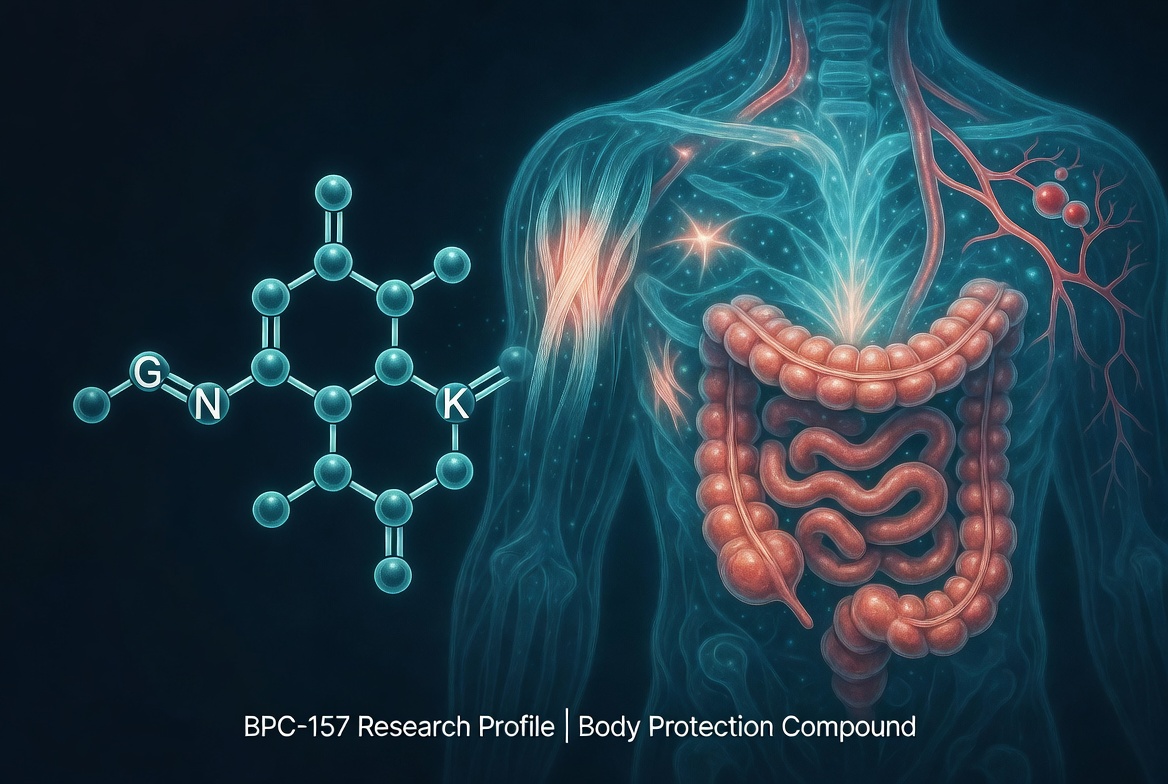
Decades of preclinical data suggest that BPC-157 (Body Protection Compound 157) is one of the most potent regenerative signals discovered in modern biochemistry. Unlike many research compounds that target a single receptor, BPC-157 influences several repair pathways at once—promoting angiogenesis (new blood vessel growth), modulating the inflammatory response, and activating VEGFR2-AKT-eNOS signaling to accelerate the healing of tendons, ligaments, and the gut lining.
Extracellular matrix & repair
Research indicates that BPC-157 works primarily by upregulating the expression of growth factor receptors and accelerating the migration of fibroblasts to the site of injury. This isn’t just “reduced inflammation”—it is the literal rebuilding of the extracellular matrix. In animal models, BPC-157 has shown the ability to heal completely transected Achilles tendons and significantly speed up the recovery of damaged skeletal muscle.
The science: key studies & findings
- Tendon & Ligament Healing: Studies in the Journal of Applied Physiology demonstrated that BPC-157 promotes the ex vivo outgrowth of tendon fibroblasts and improves their ability to survive under oxidative stress.
- Gastrointestinal Integrity: Often called a “gastric pentadecapeptide,” it was originally isolated from human gastric juice. It has shown profound effects in reversing NSAID-induced gut damage and promoting the healing of IBS-like lesions.
- Nitric Oxide Modulation: BPC-157 helps balance NO levels, providing a cytoprotective effect on the vascular system and potentially aiding in blood pressure regulation during stress.
Typical research protocols & dosing
While human clinical trials are currently lacking, the following protocols are frequently cited in the research community based on weight-adjusted calculations from successful animal studies. Most researchers suggest that systemic administration (SubQ) is effective even if the dosing isn’t directly at the injury site, though this is anecdotal.
| Goal | Dose | Frequency | Route | Cycle | Notes |
|---|---|---|---|---|---|
| Acute / post-surgical | 250-500 mcg | 1-2x daily | Oral (empty stomach) or SubQ | 4-8 weeks | Oral viable due to stability |
| Chronic injury / gut | 200-300 mcg | 1x daily | Oral or SubQ | 8-12 weeks | Periodic use |
Cost per typical 4-6 week cycle: varies widely by vendor and vial size (5-10 mg common). Expect $150-400 for a comprehensive research run. Always prioritize third-party testing (Janoshik or equivalent).
Critical disclaimer & safety notes
BPC-157 is currently sold for research purposes only and is not FDA-approved for human consumption. While it has an exceptionally high safety profile in animal toxicology studies (showing no LD50), the long-term effects in humans are unknown. If you choose to conduct research, source only from vendors with transparent testing (see our top rated BPC-157 vendors on our homepage).
\n

Harrison Peralta is a serial entrepreneur and investor with several successful startup exits, and a dedicated researcher and biohacker who turns dense laboratory data into decisions anyone can act on. Before building companies of his own, he held leadership roles at Amazon, Microsoft, and KPMG.
\n
More reading
Keep going
The independent standard for evaluating research peptide vendors — ranked on verified lab testing, transparency, and quality.
Content is provided for research and informational purposes only. Products are evaluated for laboratory research use; the site offers no medical, dosing, or human-use advice. Not for human consumption.
© 2026 · v1.0