
TB-500: Benefits, Mechanism, the “Wolverine” Stack & Dosing — What the Research Actually Shows
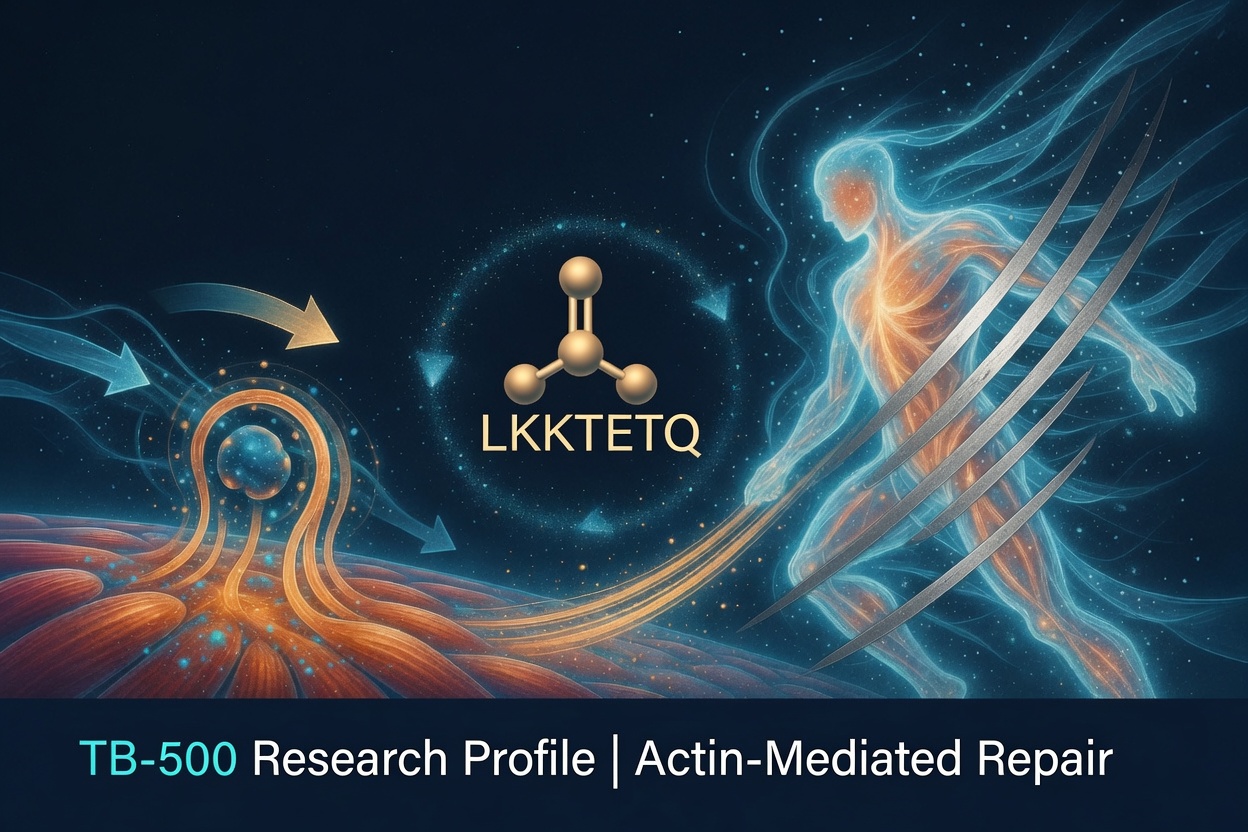
TB-500 is the synthetic 7-amino-acid fragment (Ac-LKKTETQ) of thymosin beta-4. It drives cell migration, wound contraction, angiogenesis, and reduced inflammation — and it’s the peptide most often stacked with BPC-157 in the “Wolverine” recovery protocol.
 Harrison Peralta · Updated Jun 2026 · 11 min read
- TB-500 is a synthetic peptide fragment containing the key actin-binding sequence (LKKTETQ) from thymosin beta-4 — a protein naturally present in nearly every human cell and upregulated at sites of injury.
- It works by sequestering G-actin (monomeric actin), maintaining a ready pool for rapid polymerization into F-actin filaments. This powers cell migration, cytoskeletal remodeling, wound contraction, new blood vessel formation, and modulation of inflammatory signals.
- Strong preclinical data supports accelerated healing of muscle, tendon, ligament, and skin. Clinical data exists primarily for the full thymosin beta-4 molecule (RGN-259, ophthalmic). The fragment has extensive preclinical and community backing but limited large-scale human trials.
What is TB-500?
TB-500 is the common research name for the synthetic acetylated heptapeptide Ac-LKKTETQ — the bioactive fragment corresponding to amino acids 17–23 of the full 43-amino-acid thymosin beta-4 (Tβ4) protein. While some vendors and older literature use “TB-500” interchangeably with full Tβ4, they are distinct. Full Tβ4 has been studied in clinical trials (notably RegeneRx’s RGN-259 ophthalmic formulation), whereas the fragment is the version most commonly used in systemic research-peptide contexts for its actin-regulating core activity.
Sequence: Ac-Leu-Lys-Lys-Thr-Glu-Thr-Gln (Ac-LKKTETQ) · Origin: amino acids 17–23 of thymosin beta-4 (Tβ4) · Class: synthetic actin-binding heptapeptide fragment (7 amino acids) · Core motif: LKKTETQ.
How does TB-500 work? (Mechanism of action)
The primary and best-characterized mechanism is G-actin sequestration — TB-500 manages the cell’s pool of actin monomers so they’re ready to assemble exactly where repair is needed:
- G-actin binding — binds monomeric G-actin in a 1:1 complex via the LKKTETQ motif.
- Monomer pool maintenance — prevents spontaneous polymerization while keeping a large soluble pool of actin monomers on standby.
- Directional assembly — at injury sites, local signals release the pool, enabling rapid directional F-actin filament assembly.
- Downstream repair — enhanced cell migration, wound contraction, angiogenesis, reduced pro-inflammatory signaling, and support for tissue remodeling.
- Additional effects — anti-apoptotic activity, stem-cell recruitment signals, and extracellular-matrix modulation observed across models.
The science: key studies & findings
Preclinical research on thymosin beta-4 and its active fragments is broad and consistent. Notable threads include:
- Soft-tissue & wound repair — accelerated wound healing, improved tendon repair in canine models, cardiac protection post-infarct, reduced inflammation, and enhanced angiogenesis across multiple tissue types. Explore the literature →
- Clinical development (full Tβ4) — focused on the full 43-amino-acid molecule via RegeneRx’s RGN-259 (0.1% ophthalmic solution) for dry eye disease and neurotrophic keratitis, with Phase 2/3 data supporting safety and efficacy in ocular surface healing. Read more about RGN-259 →
- The fragment (TB-500) — robust supporting preclinical literature on soft-tissue repair, but lacking dedicated large-scale human pharmacokinetic or efficacy trials for systemic musculoskeletal use.
Strong and consistent preclinical support for soft-tissue, tendon, and wound healing. Human clinical evidence is concentrated on the full Tβ4 molecule in ophthalmic indications, not the systemic fragment. Explore more on PubMed.
Claimed benefits & research-backed effects
Researchers and experienced users most frequently associate TB-500 with:
- Faster recovery from muscle strains, tendon/ligament injuries, and soft-tissue trauma.
- Reduced swelling and inflammation at injury sites.
- Improved flexibility and reduced “tightness” during healing.
- Support for chronic or stubborn connective-tissue issues, especially when stacked with BPC-157.
- Potential systemic benefits for wound healing and tissue remodeling.
Improvements in mobility and reduced downtime are commonly reported within the first 2–4 weeks of consistent use, particularly when combined with localized BPC-157 — though this is anecdotal.
Typical research protocols & dosing
Educational reference only. The figures below summarize protocols reported in the literature and research community — they are not dosing guidance for any human use.
| Goal | Common dose | Frequency | Route | Typical cycle | Notes |
|---|---|---|---|---|---|
| Loading / acute injury | 2.0–2.5 mg | 2× per week | SubQ or IM | 4–6 weeks | Most common starting protocol |
| Maintenance / ongoing | 2.0–5.0 mg weekly | 1–2× per week | SubQ | After loading phase | Lower frequency as healing progresses |
| Stubborn tendinopathy | 2.0–2.5 mg | 2× per week | SubQ near site | 6–8 weeks | Often stacked with BPC-157 |
| General recovery / wellness | 2.0 mg | Once weekly | SubQ | 4 wks on / 4 off | Periodic use |
5 mg and 10 mg vials are common. A typical 5 mg vial reconstituted with 2 mL bacteriostatic water yields convenient dosing volumes (2.5 mg per 1 mL / 50 units on an insulin syringe).
Cost per typical 4–6 week loading cycle: quality material with a verifiable COA generally ranges $150–350+ depending on vial size and vendor. Prioritize recent, batch-matched third-party testing (e.g., Janoshik HPLC + mass spec).
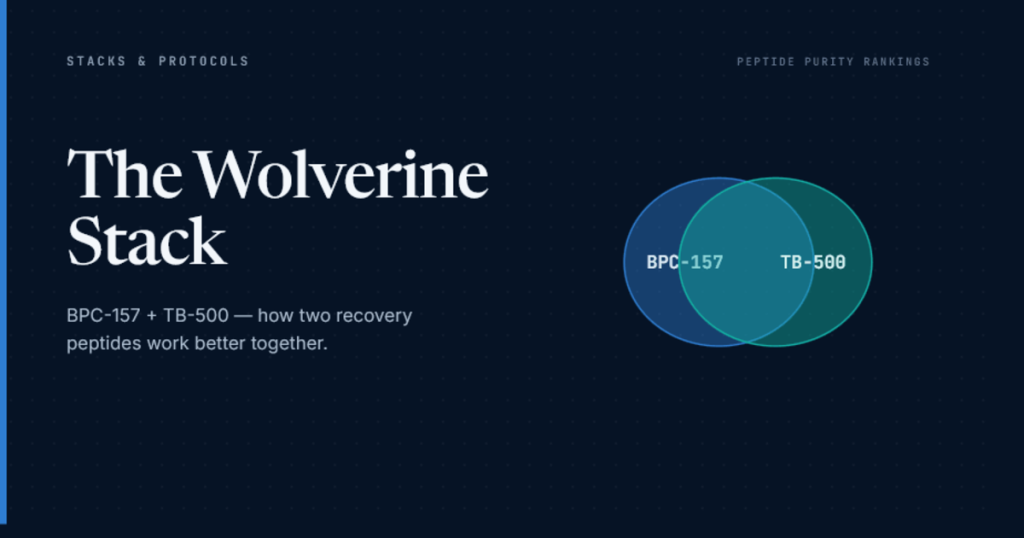
Stacking note: the classic synergistic protocol is BPC-157 + TB-500 (the “Wolverine Stack”). BPC-157 excels at localized cytoprotection and collagen organization; TB-500 excels at systemic cell migration and actin dynamics. Many researchers run them together for comprehensive soft-tissue recovery — see the BPC-157 Research Profile.
Critical disclaimer & safety notes
For laboratory research and educational purposes only. TB-500 (the fragment) and full thymosin beta-4 are research compounds. Neither form is FDA-approved for systemic human therapeutic use outside approved trials. Nothing here is medical, dosing, or human-use guidance.
Full Tβ4 has been investigated in clinical trials for specific ophthalmic indications, but long-term human safety data for the fragment at research doses is limited. It is banned by WADA for athletes. Always verify purity with an independent, batch-matched COA from a named lab — see our guide, How to Read a Janoshik COA — before any research use.
Bottom line
TB-500 represents one of the most elegant mechanisms in the research-peptide space: a short, targeted fragment that unlocks the body’s own actin machinery for repair. Paired with BPC-157’s complementary cytoprotective effects, it forms one of the most researched and discussed recovery stacks in the field. Treat it with the same rigor you apply to any research material — verify your COA, understand the distinction between fragment and full molecule, and keep expectations grounded in the available evidence.

Harrison Peralta is a serial entrepreneur and investor with several successful startup exits, and a dedicated researcher and biohacker who turns dense laboratory data into decisions anyone can act on. Before building companies of his own, he held leadership roles at Amazon, Microsoft, and KPMG.
More reading
Keep going
The independent standard for evaluating research peptide vendors — ranked on verified lab testing, transparency, and quality.
Content is provided for research and informational purposes only. Products are evaluated for laboratory research use; the site offers no medical, dosing, or human-use advice. Not for human consumption.
© 2026 · v1.0
1 thought on “TB-500 Benefits and Effect on the Body, Wolverine stack, Dose Guide & More”